Avalanche Safety: The Decisions That Matter More Than the Equipment
Transceivers and airbags save lives. But post-incident analysis keeps finding that the fatal error happened hours earlier, in a decision nobody registered as a decision.
 Dr. Ivan Petrov 7 min read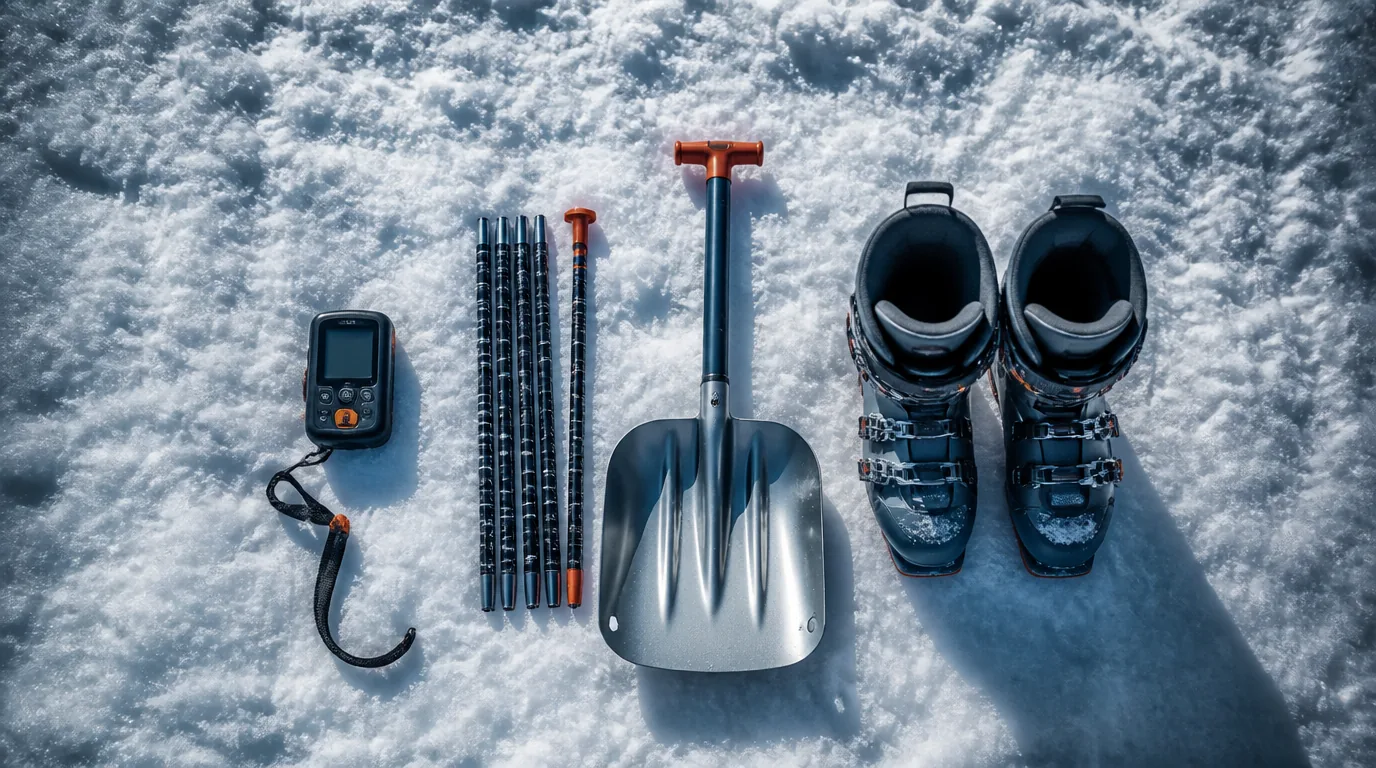
The single most consistent finding in avalanche accident analysis is that victims were not caught by surprise conditions. In the large majority of fatal incidents, the hazard was forecast, the terrain was recognisably dangerous, and at least one member of the party had reservations they did not voice. Avalanche safety is therefore mostly a decision-making problem wearing an equipment problem's clothes.
The heuristic traps
- Familiarity: a slope skied fifty times feels safe on the day the snowpack is different.
- Commitment: a long approach, a booked window or an expensive permit makes turning around feel like a loss rather than a choice.
- Social proof: existing tracks on a slope indicate that someone else survived it, which is not evidence about stability.
- Expert halo: groups defer to the most experienced member, who is often the least likely to be challenged and therefore the least corrected.
- Scarcity: the last good weather day of the trip reliably produces the worst decisions of the trip.
A workable decision framework
Read the regional forecast the evening before and write down, explicitly, which aspects and elevations you will avoid. Doing this before you can see the mountain removes the influence of a beautiful morning. On the ground, look for the three unambiguous red flags: recent avalanche activity, cracking or whumpfing underfoot, and rapid loading from new snow or wind. Any one of them means the plan for the day changes, not that the plan is executed more carefully.
Write the plan down when you cannot see the slope. Follow it when you can.
Equipment, used properly
- Transceiver, probe and shovel on every person, worn on the body rather than in a pack. All three, or none of them work.
- Practise search until a single burial is located in under five minutes. Survival probability drops sharply after fifteen.
- Airbags reduce burial depth and improve outcomes meaningfully, but do nothing against trauma, which causes roughly a quarter of avalanche deaths.
- One at a time across every suspect slope, with a spotter watching from safe ground.
The group culture point is worth stating plainly, because it is the intervention with the highest return and the lowest cost: agree in advance that anyone may call a stop, for any reason, without justifying it. Parties that establish this rule turn around more often and are involved in fewer incidents. The teams who need it most are the experienced ones, for whom the professional cost of appearing cautious feels highest.
Was this helpful?
Dr. Ivan Petrov
Science Editor, Lonic
Ivan holds a doctorate in condensed matter physics and worked on superconducting qubit error correction before moving into science journalism.
- Quantum computing
- Physics
- Research policy
Read our editorial standards or send a correction.
Related articles
The Broad Peak Avalanche: Why the Karakoram Is Slipping Earlier Each Season
Warmer summers are altering snowpack behaviour on the world's highest mountains. The consequences show up first as timing, and timing is what avalanche safety depends on.
Nirmal Purja Missing on Broad Peak: What Is Known About the Search
One of the most recognisable figures in high-altitude mountaineering is unaccounted for after an avalanche. A factual account of the incident and the conditions facing rescuers.

World Cup 2026: Argentina and Brazil Advance as the Expanded Format Takes Shape
Argentina beat Australia 4-1 and Brazil overcame Mexico 2-1. Beyond the scorelines, the 48-team tournament is already revealing what the new structure rewards.

The FIFA Privatisation Debate: What Is Actually Being Proposed
Talk of privatising parts of world football's governing structure has moved from fringe to boardroom. The arguments on both sides are stronger than the shouting suggests.