Nirmal Purja Missing on Broad Peak: What Is Known About the Search
One of the most recognisable figures in high-altitude mountaineering is unaccounted for after an avalanche. A factual account of the incident and the conditions facing rescuers.
 Tomás Ferreira 8 min read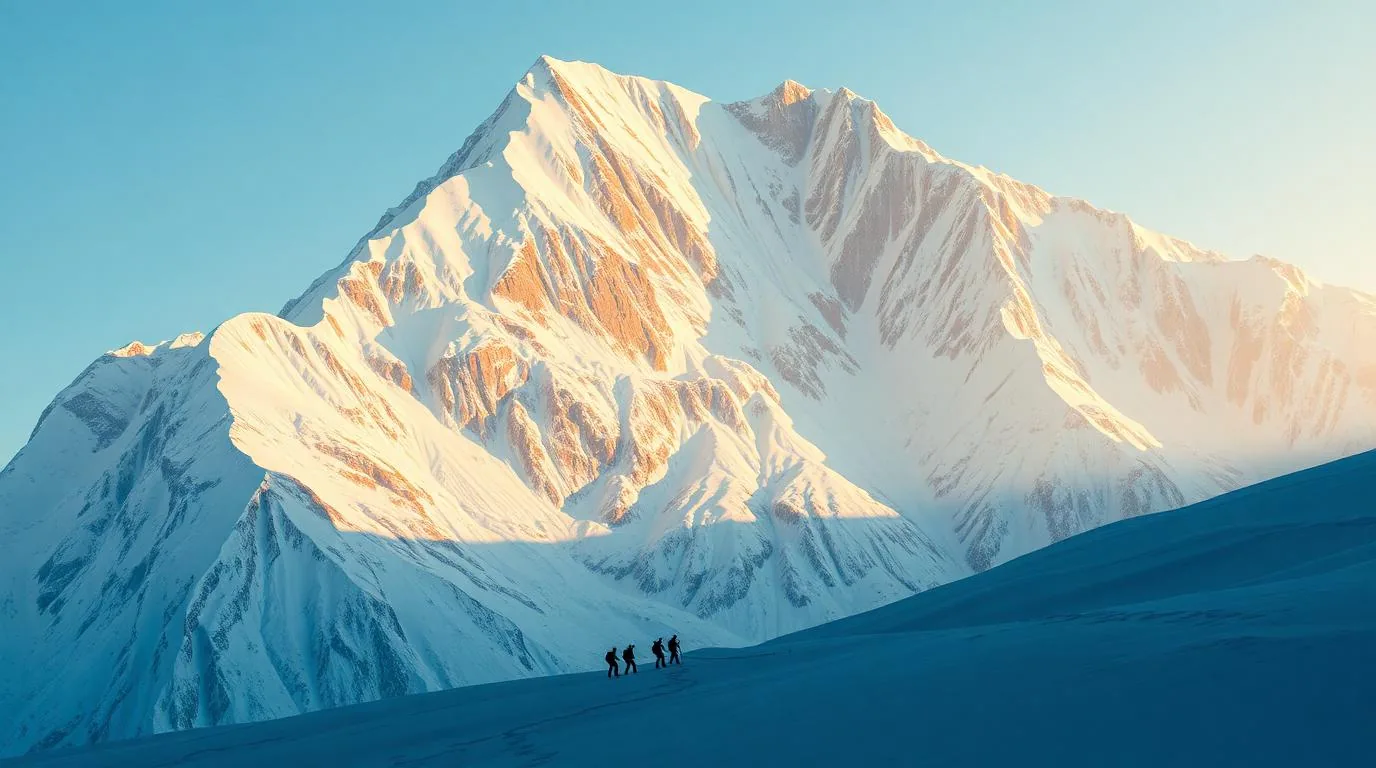
Nirmal Purja, the Nepali mountaineer whose 2019 ascent of all fourteen 8,000-metre peaks in under seven months redefined the sport's speed records, is missing on Broad Peak following an avalanche. Search operations are under way. This account sets out what has been confirmed, what has not, and why the search is unusually difficult even by Karakoram standards.
The confirmed facts
- An avalanche occurred on Broad Peak, the world's twelfth-highest mountain at 8,051 metres, on the Pakistani side of the Karakoram range.
- Purja is among those unaccounted for. Other climbers were affected; the full number has not been confirmed by Pakistani authorities.
- Helicopter reconnaissance and ground search by climbers already on the mountain are both under way, weather permitting.
- No confirmation of the outcome has been issued by his team or by Pakistani officials at the time of writing.
Why Broad Peak is harder than its reputation
Broad Peak is often described as one of the more approachable 8,000-metre summits, which is true only in the narrow sense that its standard route involves less technical climbing than its neighbours. The mountain sits beside K2 in one of the most avalanche-prone massifs on earth, with a long summit ridge that leaves climbers exposed for hours, and a false summit that has cost lives among parties that turned around late. Its fatality-to-summit ratio is not benign.
The Karakoram punishes time spent, not difficulty attempted. Broad Peak's danger is measured in hours of exposure.
What makes the search difficult
Helicopter operations above roughly 6,000 metres are marginal: thin air reduces rotor lift to the point where a machine can hover only briefly and cannot carry meaningful load. Ground search must be conducted by climbers who are themselves at altitude, fatigued and working within the same avalanche hazard that caused the incident. Weather windows in the Karakoram close without much notice, and each closure suspends the operation entirely.
Purja's record and its complications
Project Possible, the fourteen-peak campaign, was a genuine feat of logistics and endurance, and it made Purja the most visible mountaineer of his generation. It also drew criticism — over supplementary oxygen use, over helicopter transfers between base camps, and over the commercialisation of high-altitude climbing that his success accelerated. Both things are true simultaneously. His advocacy for the Nepali climbing community, historically the least credited group in the sport, is the part of the legacy least disputed by anyone.
For now, the responsible position is to report what is confirmed and resist filling the gaps. Search operations of this kind take days, and the information that emerges early is frequently wrong. We are covering the avalanche conditions on the mountain and the science of survival separately.
Was this helpful?
Tomás Ferreira
Sports Correspondent, Lonic
Tomás covers football and high-altitude mountaineering, and spent six years analysing match data for a European club before turning to journalism.
- Football
- Sports governance
- Mountaineering
Read our editorial standards or send a correction.
Related articles
The Broad Peak Avalanche: Why the Karakoram Is Slipping Earlier Each Season
Warmer summers are altering snowpack behaviour on the world's highest mountains. The consequences show up first as timing, and timing is what avalanche safety depends on.
Avalanche Safety: The Decisions That Matter More Than the Equipment
Transceivers and airbags save lives. But post-incident analysis keeps finding that the fatal error happened hours earlier, in a decision nobody registered as a decision.

World Cup 2026: Argentina and Brazil Advance as the Expanded Format Takes Shape
Argentina beat Australia 4-1 and Brazil overcame Mexico 2-1. Beyond the scorelines, the 48-team tournament is already revealing what the new structure rewards.

The FIFA Privatisation Debate: What Is Actually Being Proposed
Talk of privatising parts of world football's governing structure has moved from fringe to boardroom. The arguments on both sides are stronger than the shouting suggests.