Ukraine's Drones Are Now Hitting Russia's E-Commerce Warehouses. That Is a Deliberate Shift
Long-range Ukrainian drones struck warehouses in the Moscow and Ryazan regions, including logistics hubs used by major e-commerce platforms, killing five, as Russian strikes on Ukraine killed at least five more. The war's logistics-targeting phase is intensifying.
 Sofia Marchetti 8 min read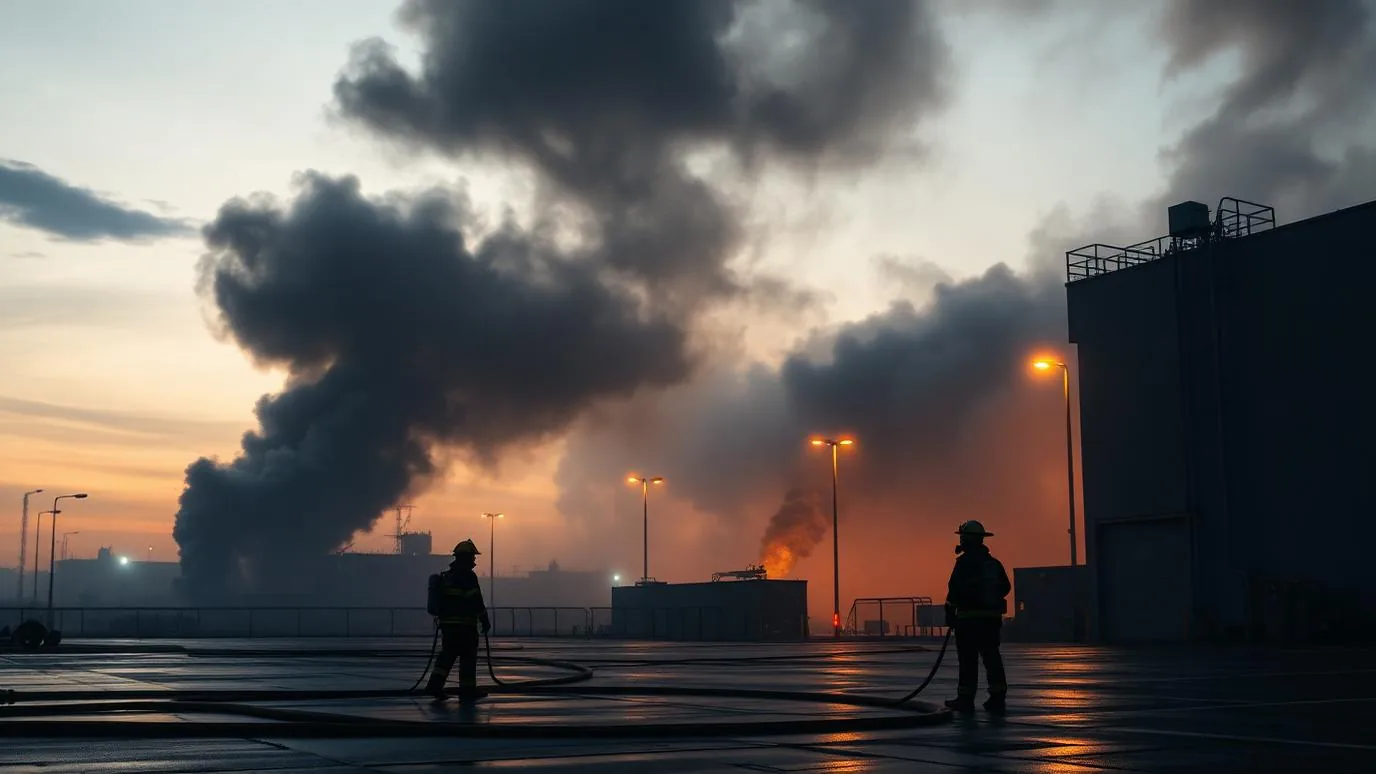
Ukrainian long-range drones struck warehouse facilities in Russia's Moscow and Ryazan regions overnight, killing at least five people, according to regional officials and independent reporting on the strikes. Among the facilities hit were logistics hubs associated with major Russian e-commerce platforms, a target set that marks a deliberate widening of Ukraine's drone campaign beyond the military-industrial and energy infrastructure that dominated the war's earlier long-range strike phases.
Russian strikes on Ukraine over the same period killed at least five people, officials there said, a reminder that the exchange of long-range attacks continues on both sides even as diplomatic attention in the wider region has been dominated by the parallel US-Iran conflict. Casualty figures from both sides in this kind of exchange typically rise in the days following an attack as rescue operations continue and hospitalised victims are accounted for.
Why warehouses and logistics hubs
Targeting distribution and warehousing infrastructure reflects a recognisable logic in a war now well into its fourth year: modern militaries and modern consumer economies both depend on the same underlying logistics architecture — warehousing, distribution centres, freight consolidation points — even when the goods flowing through it are civilian rather than military. Ukrainian officials have not always been explicit about the rationale for hitting facilities with a civilian commercial function, but analysts tracking the campaign note that large logistics complexes frequently co-locate commercial storage with military and dual-use freight, and that disrupting distribution capacity imposes broader economic costs on Russia regardless of what any single warehouse contained.
- Ukraine's long-range drone campaign has progressively expanded its target list from oil refineries and airbases toward transport and distribution infrastructure over the past year.
- E-commerce logistics hubs in Russia have grown substantially in scale as the domestic retail sector adapted to sanctions-driven shifts away from Western platforms.
- Strikes on distribution infrastructure impose costs that are diffuse and hard to quantify precisely, unlike strikes on a specific military asset with a known replacement cost.
- Russian air defence has had mixed success intercepting drones targeting facilities deep inside Russian territory, including around Moscow.
The military-economic logic of a logistics-targeting phase
Wars of attrition tend to move through phases as each side exhausts the easier target sets and searches for pressure points with a higher ratio of economic disruption to military risk. Striking distribution and logistics infrastructure fits that pattern: it is generally less heavily defended than airbases or command facilities, it affects the functioning of the broader economy that sustains the war effort, and it can be justified, rightly or as a matter of framing, as targeting dual-use infrastructure rather than purely civilian commerce.
A warehouse is not a tank factory, but a war economy runs on the same trucks, the same distribution centres, and the same fuel as its retail sector. Hitting one degrades the other whether or not that is the stated intention.
The humanitarian and legal question
Strikes that kill civilian workers at commercial logistics facilities raise distinct questions under the laws of armed conflict, which require attacks to distinguish between military and civilian objects and to avoid disproportionate civilian harm relative to any military advantage gained. Ukraine has generally argued that its long-range strikes target facilities with genuine military or dual-use significance rather than purely civilian commerce, but independent verification of that claim for any specific facility, including the warehouses hit overnight, is rarely possible in the immediate aftermath of a strike.
What to watch
- Whether Ukrainian officials publish any specific justification identifying military or dual-use activity at the warehouses struck.
- Whether Russia's air defence posture around Moscow is adjusted in response to drones penetrating this far into Russian territory.
- Whether further strikes on commercial logistics infrastructure follow, which would confirm this as a sustained campaign rather than an isolated incident.
- Casualty figures on both sides over the coming days, which typically continue to be revised upward after initial reporting.
What is clear from Sunday's exchange is that both militaries retain the capacity and the willingness to strike deep behind the other's front line, and that the categories of infrastructure considered legitimate targets continue to widen as the war grinds on with no ceasefire in sight.
Was this helpful?
Sofia Marchetti
Policy Correspondent, Lonic
Sofia reports on migration and labour policy and has reviewed visa frameworks across more than forty countries.
- Migration policy
- Labour law
- Remote work
Read our editorial standards or send a correction.
Related articles
The Ceuta Border Crisis Explained: How 60,000 Crossings Overwhelmed a City
A Spanish enclave of 85,000 people absorbed a crowd almost as large as itself in a single day. Here is what happened at Ceuta, why it happened now, and what comes next.

EU Migration Policy After Ceuta: What Actually Changes Now
Every mass-arrival event triggers the same three proposals in Brussels. This time the pressure is landing on Schengen itself — and the numbers behind the debate are worth reading closely.

Spain and Morocco: The Quiet Bargain Behind Europe's Most Fragile Border
Ceuta and Melilla are policed by an arrangement almost nobody has read, because it was never written as a single document. Understanding it explains far more than the fences do.

Truth Social Is Selling Real-Time Post Access for $100,000 a Month
Truth Social's new priority-access API charges up to $100,000 a month for real-time posts from influential accounts, with Trump both the top user and largest shareholder.