Quantum Error Correction in 2026: From Lab Curiosity to Narrow Commercial Advantage
Error correction finally works well enough to matter. That does not mean your encryption breaks tomorrow — here is the honest state of play.
 Dr. Ivan Petrov 9 min read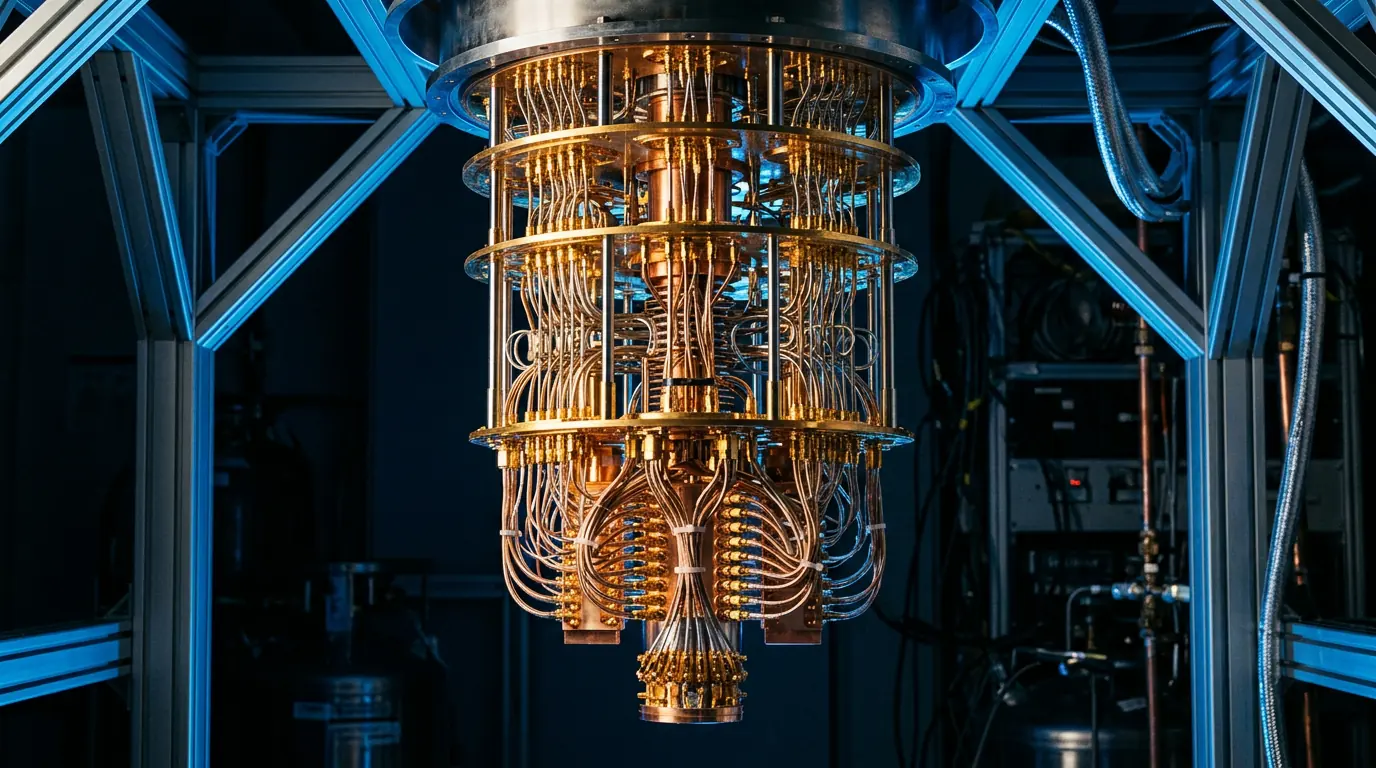
Quantum computing draws tens of thousands of searches a month, most of them variations on one question: is it real yet? The 2026 answer is genuinely more interesting than yes or no. Logical qubits — clusters of physical qubits corrected into one reliable unit — are now demonstrated at counts that make certain simulations tractable. Everything else you have read is either extrapolation or marketing.
Why error correction was the whole game
A physical qubit is a fragile thing; heat, vibration and stray electromagnetic noise all destroy its state. Error correction spreads one logical value across many physical qubits so that errors can be detected and reversed faster than they accumulate. Crossing that threshold is what separates a physics experiment from a computer, and several groups have now crossed it repeatedly rather than once.
Where quantum will land first
- Quantum chemistry: catalyst and battery electrolyte simulation where classical approximations get expensive.
- Materials science: modelling superconductors and magnetic materials from first principles.
- Optimisation: narrow logistics and portfolio problems, though classical solvers remain stubbornly competitive.
- Sensing: an underrated cousin, already commercial in navigation and medical imaging.
Quantum advantage is not a date on a calendar. It is a per-problem question, and most problems are not on the list.
The cryptography question
Breaking widely used public-key cryptography needs millions of high-quality physical qubits — orders of magnitude beyond current machines. The real deadline is 'harvest now, decrypt later': data stolen today can be stored until a capable machine exists. That is why post-quantum standards are already being rolled into browsers, VPNs and payment infrastructure. Migration, not panic, is the correct posture.
How to read quantum announcements
Ask three questions of any headline. How many logical, not physical, qubits? Was the benchmark problem chosen to suit the hardware? And could a well-tuned classical machine do it faster? The claims that survive all three are the ones worth your attention.
Was this helpful?
Dr. Ivan Petrov
Science Correspondent, Lonic
Ivan holds a doctorate in condensed matter physics and worked on superconducting qubit error correction before moving into science journalism.
- Quantum computing
- Physics
- Research policy
Read our editorial standards or send a correction.
Related articles

Anthropic Says AI Orchestrated a Real Cyberattack. Here Is What That Actually Means
The disclosure describes a model executing most of an intrusion campaign with limited human direction. Separating the genuinely new part from the familiar part matters.

Defending at Machine Speed: How Security Teams Have to Change
If attackers automate the middle of the kill chain, defenders who keep a human in every loop will simply be outrun. A practical framework for what to automate first.

Agentic Orchestration Explained: What It Is and Why Enterprises Are Buying It
Search interest is up sharply and vendors have moved fast. Underneath the terminology is a genuinely useful architecture — and a set of failure modes worth understanding first.
Antidetect Browsers: What They Are, Who Uses Them, and Why Search Interest Is Rising
A tool built for legitimate multi-account operations sits one step away from fraud infrastructure. A clear-eyed look at the technology and its consequences.