Data Center Power Consumption Is the New Bottleneck - the Chip Shortage Is Over
Fabs caught up. Grids did not. The binding constraint on computing has quietly moved from silicon to electricity.
 Elias Braun 7 min read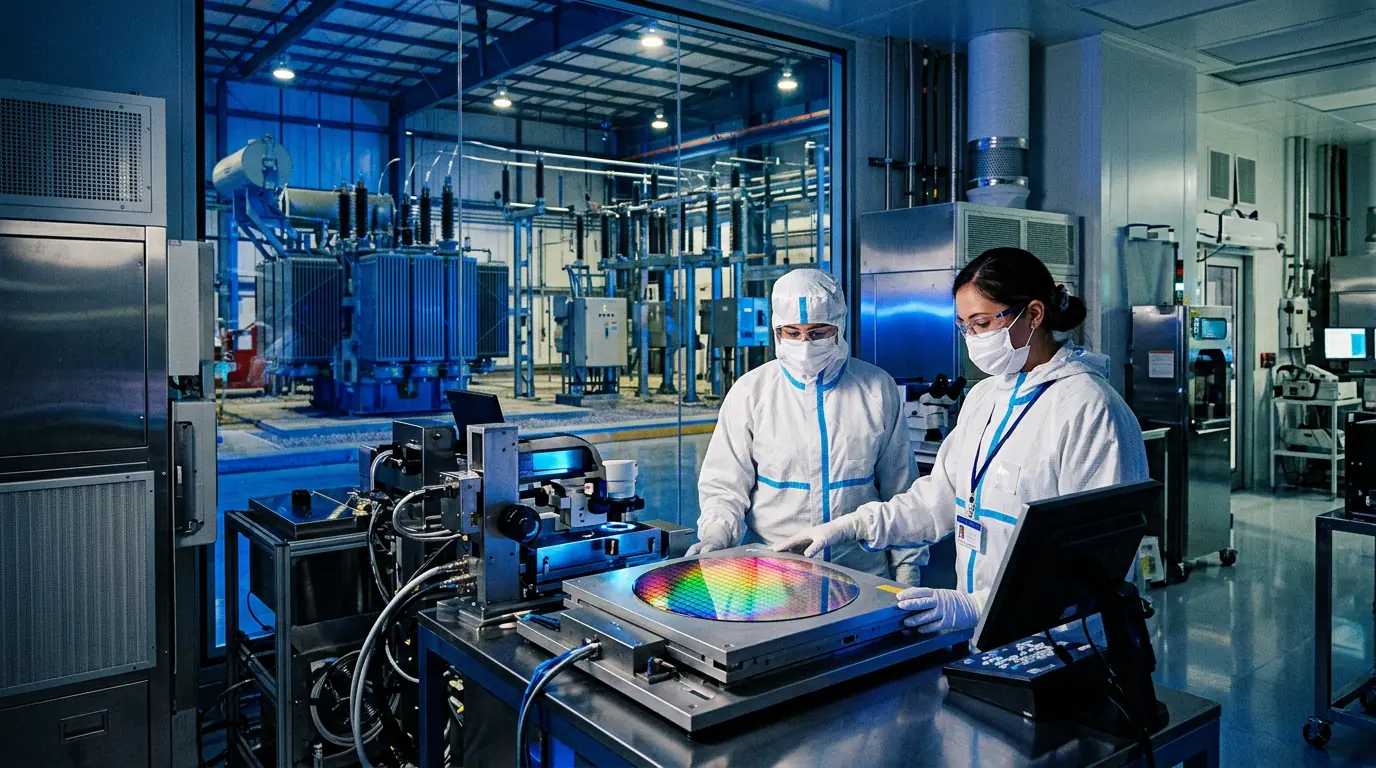
The semiconductor shortage that defined the early 2020s has resolved almost everywhere except the leading edge, where advanced packaging and high-bandwidth memory remain tight. In its place a different constraint has emerged, and it is far harder to fix with capital alone: interconnection queues, transformers and transmission.
Why electricity became the bottleneck
- AI training and inference clusters draw power densities that legacy data centre designs were never built for.
- Grid interconnection waits now run for years in several major markets — longer than it takes to build the facility.
- Large transformers and switchgear have multi-year lead times, with a handful of global suppliers.
- Cooling water and local heat rejection are becoming siting constraints in their own right.
The scarce resource is no longer a wafer. It is a firm megawatt with a delivery date.
The responses being tried
Operators are signing long-term nuclear and geothermal contracts, co-locating with generation, and building on-site storage to smooth peaks. More quietly, they are getting serious about efficiency again: model distillation, better scheduling and workload placement in regions with surplus power all reduce demand without new steel in the ground.
Why it matters beyond tech
Every industrial electrification plan — heat pumps, steel, transport — is competing for the same queue. How regulators sequence those connections is fast becoming one of the most consequential and least covered policy decisions of the decade.
Was this helpful?
Elias Braun
Infrastructure Correspondent, Lonic
Elias covers energy systems and industrial decarbonisation, with a background in grid planning for a European transmission operator.
- Energy systems
- Climate technology
- Infrastructure
Read our editorial standards or send a correction.
Related articles
Fire Weather Explained: The Science Behind Europe's Worsening Wildfire Seasons
Heat domes, vapour pressure deficit and fuel moisture sound technical. They are also the three numbers that decide whether a spark becomes a headline.

Japan Earthquake 2026: What We Know as 300,000 Are Told to Leave
Thirteen deaths confirmed, hundreds of thousands under evacuation instruction and a rescue window measured in days. A clear account of the situation and the response.
Earthquake Preparedness: What Japan Does That Other Countries Still Do Not
Similar magnitudes produce wildly different death tolls. The difference is almost entirely engineering, drills and building codes enforced over decades.
A Decades-Old Flaw Let Researchers Rewrite DNA Evidence Files Using Claude
A long-standing vulnerability in widely used Thermo Fisher forensic DNA software let researchers add or remove profiles from evidence files, exposing the fragility of digital chain of custody.