Room-Temperature Superconductivity Claims and How Replication Actually Works
A new claim of ambient-pressure, room-temperature superconductivity has generated familiar excitement — and familiar scepticism. The replication process itself is the more interesting story.
 Dr. Ivan Petrov 7 min read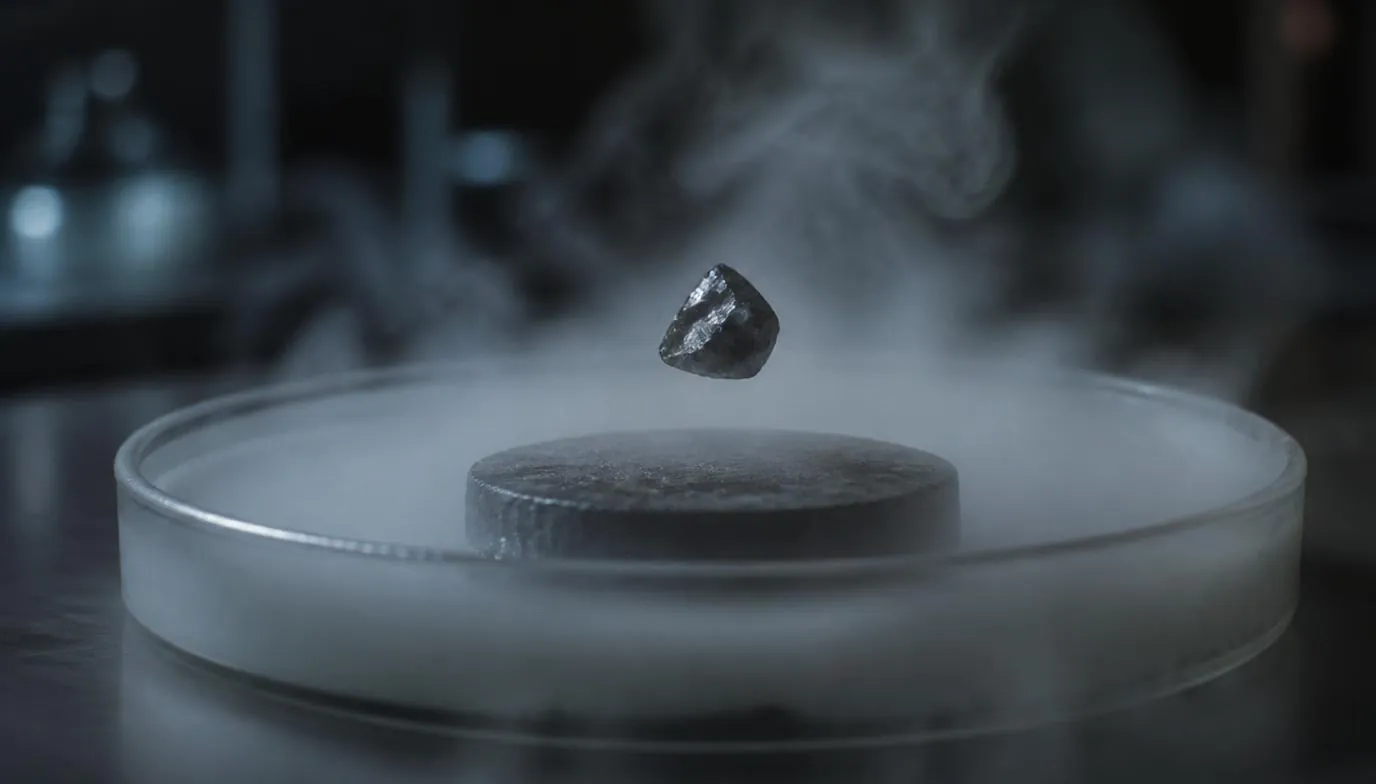
Room-temperature superconductivity — a material that conducts electricity with zero resistance without requiring extreme cooling or crushing pressure — would be one of the most significant materials science breakthroughs in a generation, with implications for power transmission, magnetic confinement, computing and much else. It is also a claim that has been made, and subsequently withdrawn or discredited, several times over the past few years. The most recent claim to circulate widely follows the same basic pattern as its predecessors, and is worth using as an illustration of how the scientific community actually tests these things, rather than as settled fact in either direction.
What a genuine claim requires
A credible superconductivity claim needs to demonstrate several signatures together: zero electrical resistance below a critical temperature, the Meissner effect (expulsion of magnetic fields from within the material), and a plausible theoretical mechanism consistent with known physics. Historically, claims that show only one of these signatures — magnetic levitation without a clean resistance measurement, for instance — have often turned out to be explained by more mundane effects, including diamagnetism or measurement artefacts, rather than superconductivity.
- Zero resistance must be shown across a range of temperatures and currents, not as a single measurement.
- The Meissner effect should be demonstrated with proper magnetic field exclusion measurements, not simply a video of a sample appearing to float.
- Independent labs need access to genuine samples or a reproducible synthesis method, not just the original team's data.
- A theoretical explanation, while not strictly required for a valid empirical claim, substantially increases confidence when the numbers make physical sense.
Why replication takes months, not days
Independent replication is slower than public interest usually allows for, and for structural reasons rather than any lack of urgency. Synthesising a novel material with precisely the claimed composition and structure is often difficult even with a published method, because small variations in processing conditions can produce a different material altogether. Multiple labs worldwide typically attempt replication in parallel once a claim gains attention, and disagreement between early attempts is common and expected — some report partial signatures, some report none, and reconciling those differences takes careful comparative work rather than a single decisive experiment.
A single positive replication does not settle a claim like this, and a single failed one does not kill it either. What matters is the pattern across many independent attempts, using materials that can be shown to be genuinely comparable.
Why the field remains cautious
Scepticism in this specific area is well earned. Previous high-profile claims of superconductivity at unusually high temperatures or pressures have been retracted after independent groups failed to reproduce key results, and in at least one prominent case an investigation found evidence of data manipulation. That history means the burden of proof for any new claim is, appropriately, high, and researchers in the field have become notably more careful about distinguishing preliminary, unreviewed reports from findings that have survived independent scrutiny and peer review.
What to watch for
- Whether independent laboratories, working from either shared samples or a clearly reproducible synthesis recipe, report the same resistance and Meissner effect signatures.
- Whether the claim has been through, or is undergoing, formal peer review, as opposed to circulating only as an unreviewed preprint.
- Whether a coherent theoretical mechanism emerges that is consistent with the reported results.
- How the original authors respond to failed replication attempts — engagement and data-sharing are a healthier sign than defensiveness.
The honest position on any current claim of ambient superconductivity is that it should be treated as an interesting, unconfirmed hypothesis until independent labs converge on a consistent result. That is not scientific pessimism; it is simply how materials science claims of this magnitude have always had to be tested, and the process, however slow, has generally worked.
Was this helpful?
Dr. Ivan Petrov
Science Editor, Lonic
Ivan holds a doctorate in condensed matter physics and worked on superconducting qubit error correction before moving into science journalism.
- Quantum computing
- Physics
- Research policy
Read our editorial standards or send a correction.
Related articles

Fire Weather Explained: The Science Behind Europe's Worsening Wildfire Seasons
Heat domes, vapour pressure deficit and fuel moisture sound technical. They are also the three numbers that decide whether a spark becomes a headline.

Japan Earthquake 2026: What We Know as 300,000 Are Told to Leave
Thirteen deaths confirmed, hundreds of thousands under evacuation instruction and a rescue window measured in days. A clear account of the situation and the response.
Earthquake Preparedness: What Japan Does That Other Countries Still Do Not
Similar magnitudes produce wildly different death tolls. The difference is almost entirely engineering, drills and building codes enforced over decades.
A Decades-Old Flaw Let Researchers Rewrite DNA Evidence Files Using Claude
A long-standing vulnerability in widely used Thermo Fisher forensic DNA software let researchers add or remove profiles from evidence files, exposing the fragility of digital chain of custody.