Israel Pushes Back on the Hamas Disarmament Framework Over Security Fears
An Israeli official says Israel has raised 'serious security concerns' about the Hamas disarmament framework, as strikes in Gaza continue and a formal deal remains unsigned.
 Sofia Marchetti 9 min read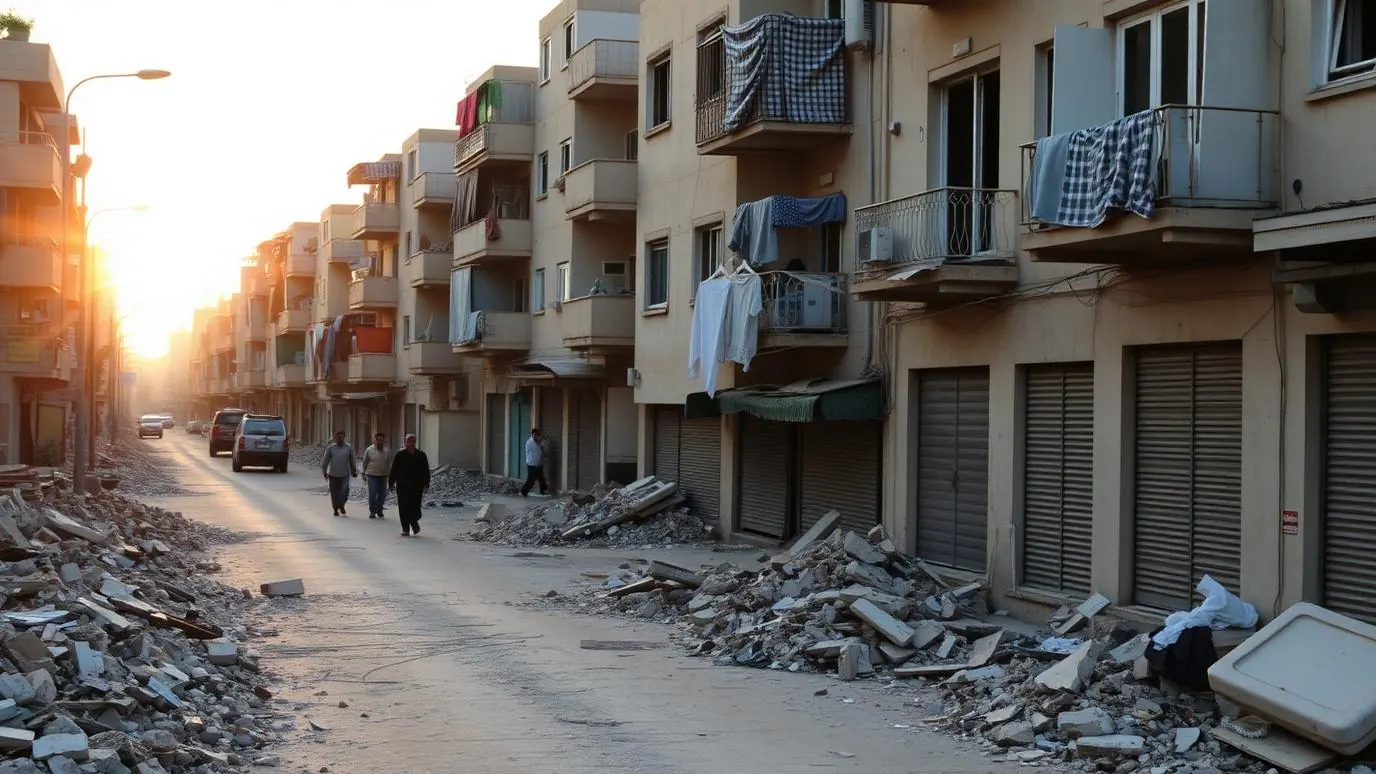
Israel has formally raised objections to elements of a proposed framework under which Hamas would disarm and hand over control of Gaza territory, according to Israeli official Doron Spielman, who told AP that Israel had communicated 'serious security concerns' through the mediating parties. The pushback comes even as Hamas has said publicly that it has agreed in principle to disarm, a statement that on its face looked like the most significant concession of the war but which now sits alongside continued fighting on the ground.
Strikes in Gaza killed at least 17 to 18 people over 1 and 2 August, AP reported, among them children. The toll is a reminder that an agreement in principle is not a ceasefire, and that the gap between diplomatic language and events on the ground remains wide. An Israeli minister said explicitly that no deal is currently in place that would require Israel to halt its attacks, a statement that undercuts any impression that a disarmament agreement has translated into a pause in hostilities.
What Hamas has actually agreed to
Hamas's position, as reported, is an agreement in principle to disarm and to transfer control of Gaza territory, most likely to some combination of Palestinian Authority-linked administration and international oversight, though the precise governance arrangement has not been made public. Agreements in principle in this conflict have a mixed record: they have previously signalled genuine shifts in position, and at other times functioned as a negotiating posture intended to shape international pressure rather than a binding commitment.
- Hamas's statement addresses disarmament and territorial control but does not specify a timeline or verification mechanism.
- Israel's objections are described as security concerns rather than a rejection of the framework outright.
- Mediators have not published the text of the framework, so independent verification of either side's characterisation is limited.
- The framework follows the pattern set by the US-brokered Lebanon-Israel arrangement signed on 26 June, which also required a non-state armed group to disarm.
Why Israel is not standing down
Israel has extended the emergency mobilisation of its army by a further two months, according to Al Jazeera, a decision that signals the military does not expect an imminent stand-down regardless of how the disarmament talks proceed. Extending mobilisation is both a practical measure, keeping reservists available, and a political one, communicating to domestic audiences that Israel is not relaxing its posture while the framework remains unresolved.
An agreement in principle and an order to stand down are two different documents, and only one of them has been signed.
The Lebanon precedent
The Gaza framework is being read in the region against the backdrop of the US-brokered agreement between Lebanon and Israel signed on 26 June, which similarly required a non-state armed group, Hezbollah, to disarm. That agreement has itself struggled to move from signature to implementation, as detailed in our reporting on why the Hezbollah deal is stalling. Officials involved in the Gaza talks are aware of that precedent, and it is shaping how sceptically both Israeli and international observers are treating Hamas's statement of principle.
The humanitarian toll continues regardless
Whatever the diplomatic status of the framework, the casualties reported over the first two days of August are a sober reminder that negotiations and military operations are proceeding on separate tracks. Families in Gaza have had to absorb losses, including of children, in the same window in which officials in Washington, Doha and Jerusalem have been discussing the shape of a post-war settlement. That asymmetry, between the pace of diplomacy and the pace of harm on the ground, has defined most of the negotiating periods in this conflict.
What to watch
- Whether Israel's stated security concerns are addressed through amendments to the framework or become a reason to shelve it.
- Whether the extended army mobilisation is allowed to lapse if talks progress, which would be a genuine signal of de-escalation.
- Whether mediators release any text of the framework, which would allow independent assessment of what Hamas has actually agreed to.
- Casualty figures over the coming days, which will indicate whether military operations are being scaled back regardless of the diplomatic track.
The most accurate summary at this stage is that a framework exists in outline, that Hamas has signalled openness to it, and that Israel has neither accepted nor rejected it outright. Until Israel's stated security concerns are resolved and translated into an actual order to halt operations, the disarmament deal remains a proposal rather than an agreement.
Was this helpful?
Sofia Marchetti
Policy Correspondent, Lonic
Sofia reports on migration and labour policy and has reviewed visa frameworks across more than forty countries.
- Migration policy
- Labour law
- Remote work
Read our editorial standards or send a correction.
Related articles

Why Hezbollah's Disarmament Deal Is Already Stalling a Month After Signing
The Washington-brokered Hezbollah disarmament framework was signed in June, but Hezbollah's leader condemned it within a day and Lebanese ministers say it falls short.
The Ceuta Border Crisis Explained: How 60,000 Crossings Overwhelmed a City
A Spanish enclave of 85,000 people absorbed a crowd almost as large as itself in a single day. Here is what happened at Ceuta, why it happened now, and what comes next.

EU Migration Policy After Ceuta: What Actually Changes Now
Every mass-arrival event triggers the same three proposals in Brussels. This time the pressure is landing on Schengen itself — and the numbers behind the debate are worth reading closely.

Spain and Morocco: The Quiet Bargain Behind Europe's Most Fragile Border
Ceuta and Melilla are policed by an arrangement almost nobody has read, because it was never written as a single document. Understanding it explains far more than the fences do.