Artemis and the Crewed Lunar Programme: Where the Schedule Actually Stands
NASA's return to the Moon has slipped repeatedly. Here is a sober look at which delays are routine engineering caution and which point to deeper structural problems.
 Dr. Ivan Petrov 8 min read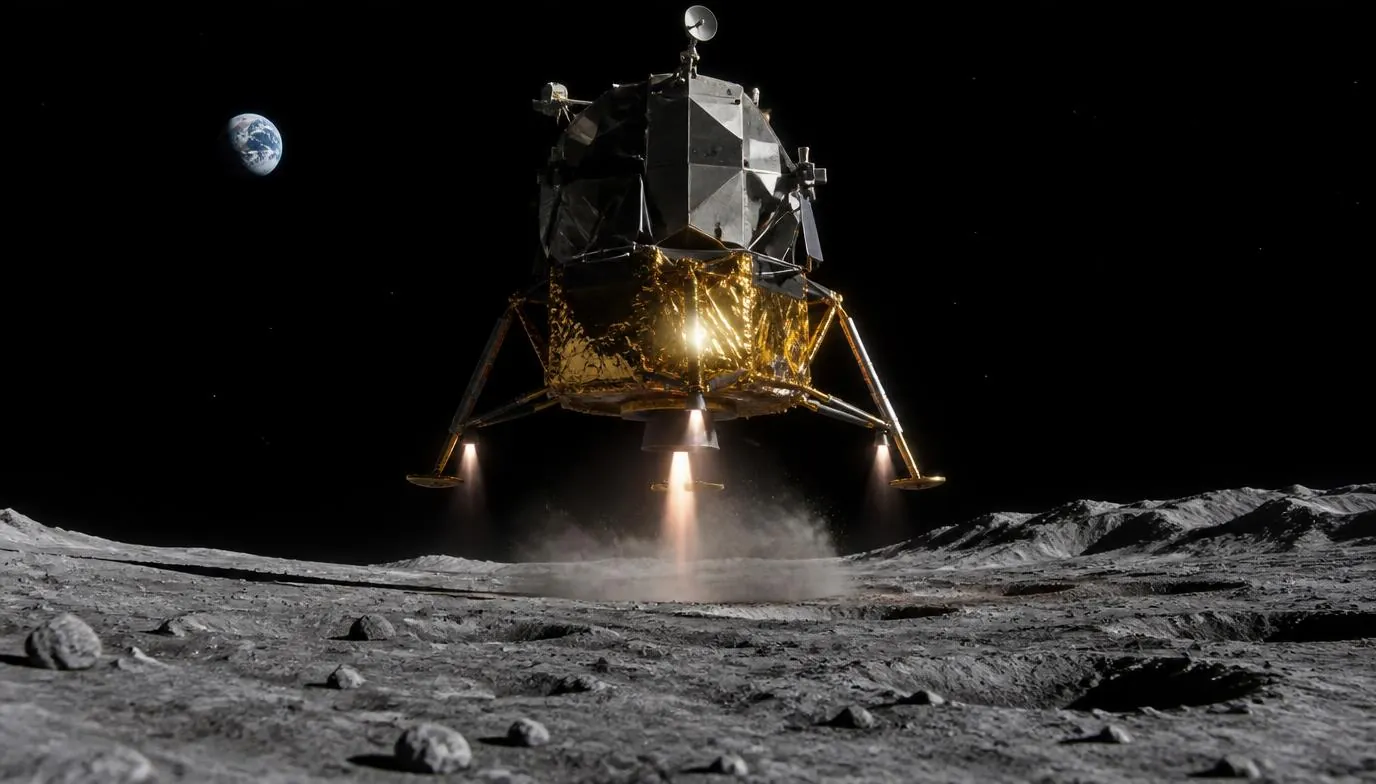
Artemis, NASA's programme to return astronauts to the Moon, has become something of a case study in how large aerospace schedules actually move: not in a straight line, but in a series of announced dates that slip, get re-announced, and slip again. Artemis I flew uncrewed around the Moon in late 2022. Artemis II, a crewed lunar flyby without a landing, has been repeatedly pushed back amid heat-shield and life-support issues, and Artemis III, the mission intended to put astronauts back on the lunar surface, has moved later with almost every public schedule update since the programme's inception.
What has actually flown, and what has not
It is worth separating what is demonstrated hardware from what remains on paper. The Space Launch System rocket and Orion capsule have flown once, uncrewed. The Human Landing System — the vehicle that would actually put astronauts on the surface — has not flown in any lunar-relevant configuration. Nor has the orbital refuelling architecture it depends on, which requires multiple docking and propellant-transfer operations in orbit that have never been attempted at this scale. Each of these is a substantial engineering milestone in its own right, and none of them can be skipped.
- Orion's heat shield showed unexpected charring during Artemis I re-entry, prompting a lengthy investigation before crew could be cleared to fly inside it.
- The lunar lander contract depends on repeated in-orbit propellant transfer, a technique demonstrated only in early, partial form.
- Spacesuits for surface operations have faced their own separate development and testing schedule.
- Ground infrastructure at Kennedy Space Center requires modification between each SLS launch, constraining how quickly missions can follow one another.
Why the slips keep happening
Some of this is ordinary and even reassuring: human spaceflight programmes that rush past unresolved safety findings tend to end badly, and NASA's institutional memory of exactly that is long. But independent oversight bodies, including NASA's own Inspector General and the Government Accountability Office, have pointed to a different problem as well — namely that budget and contracting structures spread across multiple companies and centres create dependencies that are difficult to manage on a fixed schedule. A delay in one contractor's propellant-transfer demonstration cascades through the entire mission sequence, because later steps cannot be tested until earlier ones are proven.
The programme is not behind because any single team failed. It is behind because the architecture requires several unprecedented things to work in sequence, on schedules that were set optimistically at the outset.
The geopolitical backdrop
Much of the public pressure on Artemis comes from China's own lunar ambitions, which have their own stated (and similarly aggressive) target dates for a crewed landing later this decade. Whether that competitive framing accelerates genuine progress or simply increases pressure to announce dates that later slip is a matter of some debate among space policy analysts. Historically, schedule pressure driven by external competition has produced both remarkable achievement and serious safety compromise, and it is not yet clear which pattern Artemis will follow.
What a realistic timeline looks like
Most independent assessments now treat a crewed lunar flyby as plausible within the next one to two years, contingent on outstanding technical reviews closing without further surprises. A crewed landing appears to be a considerably longer proposition, given how much of the landing architecture remains unflown. Readers should treat any single announced date, including NASA's own, as a floor rather than a forecast: the programme's own history suggests the true date is more likely to be later than earlier.
None of this makes Artemis a failure. Large first-of-a-kind human spaceflight programmes have almost always taken longer than initially advertised, including Apollo's own predecessor programmes. The more useful question is not when the next date will be, but whether the underlying engineering milestones — heat shield qualification, orbital refuelling, a flown lander — are being met in the right order, even slowly.
Was this helpful?
Dr. Ivan Petrov
Science Editor, Lonic
Ivan holds a doctorate in condensed matter physics and worked on superconducting qubit error correction before moving into science journalism.
- Quantum computing
- Physics
- Research policy
Read our editorial standards or send a correction.
Related articles
Fire Weather Explained: The Science Behind Europe's Worsening Wildfire Seasons
Heat domes, vapour pressure deficit and fuel moisture sound technical. They are also the three numbers that decide whether a spark becomes a headline.

Japan Earthquake 2026: What We Know as 300,000 Are Told to Leave
Thirteen deaths confirmed, hundreds of thousands under evacuation instruction and a rescue window measured in days. A clear account of the situation and the response.
Earthquake Preparedness: What Japan Does That Other Countries Still Do Not
Similar magnitudes produce wildly different death tolls. The difference is almost entirely engineering, drills and building codes enforced over decades.
A Decades-Old Flaw Let Researchers Rewrite DNA Evidence Files Using Claude
A long-standing vulnerability in widely used Thermo Fisher forensic DNA software let researchers add or remove profiles from evidence files, exposing the fragility of digital chain of custody.