Qatar Says Ceasefire Drafts Are Circulating, but Washington and Tehran Are Not Talking Directly
Doha says draft texts of a potential US-Iran agreement are being passed between the parties even as no direct talks are taking place, against the backdrop of Trump's 'last chance' ultimatum and Iranian denials that any deal is close.
 Sofia Marchetti 8 min read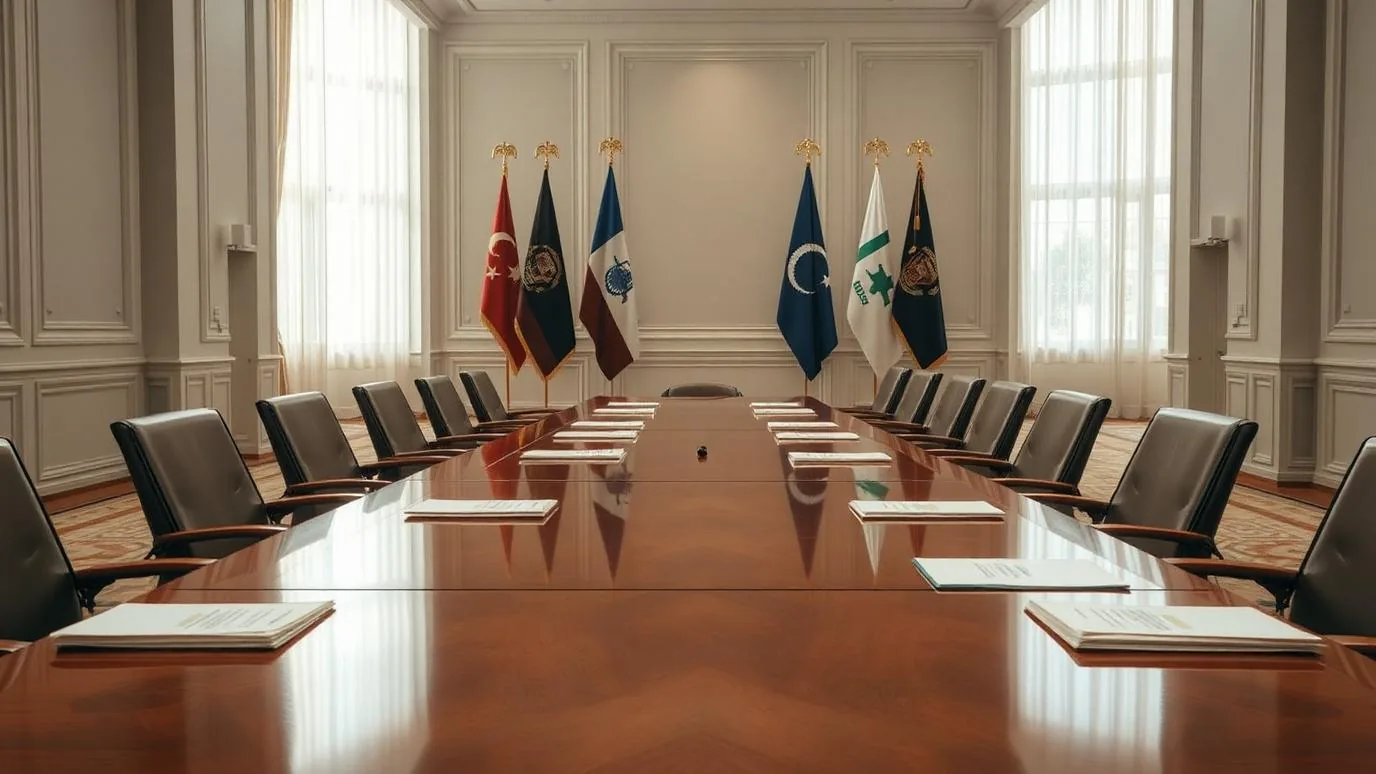
Qatar's government said on Sunday that drafts of a potential agreement between the United States and Iran are being circulated between the two sides, even though no direct talks between American and Iranian officials are currently taking place. The statement is the clearest official confirmation yet that some form of diplomatic process is under way behind the continued exchange of strikes, though Doha was careful to describe the activity as the passing of draft language rather than active negotiation.
That distinction matters. A draft can circulate for weeks without either side committing to it, and previous rounds of indirect contact between Washington and Tehran, both in this conflict and in years prior, have produced documents that went nowhere once domestic political pressures in either capital reasserted themselves.
How shuttle diplomacy actually works
When two governments will not sit in the same room, a mediating state carries messages, proposals and counter-proposals between them, often refining language over multiple rounds before either side is asked to formally respond. Qatar has performed this role in several regional disputes, most recently in aspects of the Gaza and Lebanon negotiations, and its officials have developed a working method of testing language privately with both sides before it is presented as anything resembling a joint text.
- Qatari officials say drafts are being exchanged, not that either government has agreed to the terms contained in them.
- No date or venue for direct US-Iran talks has been announced or is understood to be scheduled.
- Tehran's foreign ministry has repeated its denial that substantive negotiations are under way, a position it has maintained consistently through this phase of the conflict.
- Doha's willingness to confirm the existence of drafts publicly, rather than staying silent, is itself notable and may be intended to build pressure on both parties to engage more seriously.
Trump's 'last chance' framing
President Trump has described the current moment as Iran's 'last chance', language that reads as an ultimatum rather than an invitation to negotiate, and one that sits uneasily with reports that Qatar is actively shuttling draft text between the two governments. An ultimatum and a live drafting process are not necessarily contradictory: a mediator can be refining language for a deal that one side is simultaneously threatening to abandon if it is not accepted quickly. But the combination makes it difficult to assess how close an actual agreement might be, since threats of this kind have both preceded genuine breakthroughs and preceded further escalation in past cycles of this conflict.
An ultimatum tells you the deadline someone wants understood. It does not tell you whether the document being drafted will still exist when the deadline arrives.
Why Tehran keeps denying it
Iran's consistent public denial that negotiations are taking place is not necessarily inconsistent with drafts being passed through Doha. Governments engaged in indirect, deniable diplomacy routinely maintain a public posture of non-engagement precisely because acknowledging talks can be read domestically, and by allied or rival states, as a sign of weakness or capitulation before any terms have actually been secured. Tehran's denials may therefore describe the absence of direct, acknowledged negotiation accurately while understating the extent of indirect contact occurring through Qatari channels.
What would need to happen for this to become real
- Both Washington and Tehran would need to move from exchanging draft language to formally responding to a single agreed text.
- A verification or monitoring mechanism would need to be specified, given the pattern in other regional disarmament and ceasefire frameworks of details being left vague at the drafting stage.
- Some public acknowledgment from Tehran that talks, even indirect ones, are occurring would mark a genuine shift from its current denial.
- A pause in strikes, rather than a paper agreement alone, remains the only reliable signal that de-escalation is genuinely under way.
The most defensible reading of Sunday's developments is that a diplomatic channel exists and is active, that it has not yet produced anything either side is willing to sign, and that the gap between Trump's public ultimatum and Tehran's public denial leaves plenty of room for this process to collapse as easily as it could conclude.
Was this helpful?
Sofia Marchetti
Policy Correspondent, Lonic
Sofia reports on migration and labour policy and has reviewed visa frameworks across more than forty countries.
- Migration policy
- Labour law
- Remote work
Read our editorial standards or send a correction.
Related articles
Trump Halts New Iran Strikes as Hormuz Talks Restart Under Gulf Pressure
Trump says planned strikes on Iran are cancelled 'subject to a deal being made rapidly', as Gulf states push for calm and Tehran denies any negotiation is under way.
The Ceuta Border Crisis Explained: How 60,000 Crossings Overwhelmed a City
A Spanish enclave of 85,000 people absorbed a crowd almost as large as itself in a single day. Here is what happened at Ceuta, why it happened now, and what comes next.
EU Migration Policy After Ceuta: What Actually Changes Now
Every mass-arrival event triggers the same three proposals in Brussels. This time the pressure is landing on Schengen itself — and the numbers behind the debate are worth reading closely.

Spain and Morocco: The Quiet Bargain Behind Europe's Most Fragile Border
Ceuta and Melilla are policed by an arrangement almost nobody has read, because it was never written as a single document. Understanding it explains far more than the fences do.