CRISPR Base Editing Reaches Approved Therapies: What Has Actually Changed
A more precise descendant of the original CRISPR technique has moved from laboratory demonstration to authorised treatment. The gap between the two remains a useful lesson in how gene editing actually gets to patients.
 Dr. Ivan Petrov 7 min read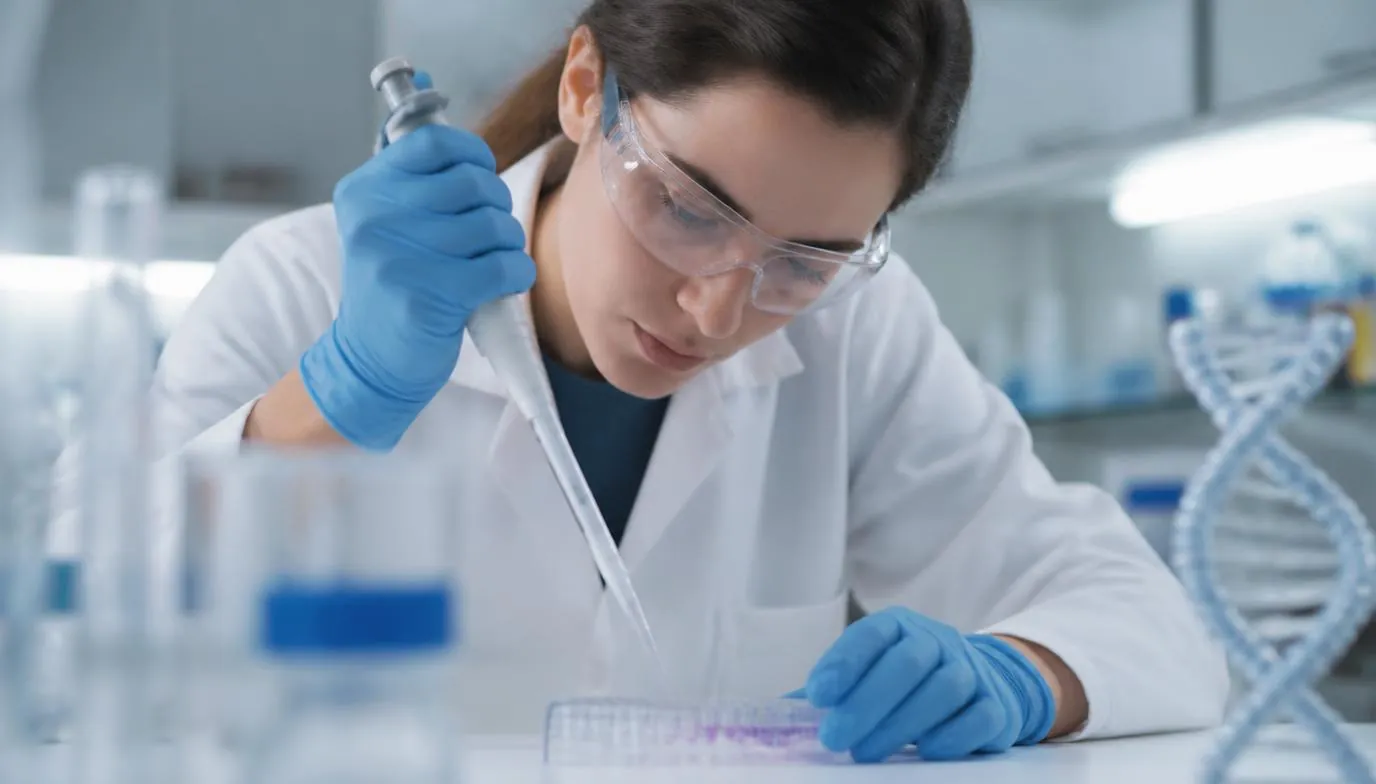
Base editing, a refinement of CRISPR gene editing developed roughly a decade ago, has moved from a promising laboratory technique into a small but growing number of authorised clinical treatments. Unlike the original CRISPR-Cas9 approach, which cuts both strands of the DNA double helix and relies on the cell's repair machinery to fix the break, base editing chemically converts one DNA letter into another without cutting the helix at all. That distinction sounds technical, but it has meaningful consequences for safety and precision.
Why the distinction matters clinically
Double-strand cuts, the hallmark of first-generation CRISPR, carry a real risk of unintended insertions, deletions, or larger chromosomal rearrangements at the cut site, because cellular repair is not perfectly precise. Base editing avoids that particular failure mode by leaving the DNA backbone intact and instead using an enzyme to convert one nucleotide directly into another at a targeted location. This does not eliminate off-target risk altogether — base editors can still act at unintended sites in the genome, and monitoring for that remains an important part of clinical development — but it removes an entire category of the more disruptive errors associated with double-strand breaks.
- First-generation CRISPR: cuts both DNA strands, relies on cellular repair, can produce larger unintended edits.
- Base editing: converts a single DNA letter without cutting both strands, generally produces smaller and more predictable changes.
- Both approaches still require careful off-target screening before and after treatment.
- Base editing is currently better suited to correcting single-letter mutations than to larger insertions or gene rearrangements.
What has been approved, and for what
Regulatory authorisation for base-edited therapies has so far been limited to specific, well-characterised genetic conditions caused by single-point mutations, including certain inherited blood disorders and a small number of severe paediatric conditions treated on a compassionate or trial basis. These are narrow indications by design: regulators have understandably wanted a clear, well-understood genetic target and years of preclinical and early clinical safety data before authorising a treatment that permanently alters a patient's genome. That caution has meant a slow, case-by-case path to approval rather than a broad category-wide clearance.
Each approval is still a bespoke achievement — a specific edit, for a specific mutation, validated over years. It is not yet a general-purpose platform that any disease can simply be plugged into.
The remaining obstacles
Delivery remains one of the most stubborn practical problems in the field. Editing cells outside the body (ex vivo), correcting them, and reinfusing them works well for blood and immune cell disorders, where cells can be removed, treated and returned. It works far less well for conditions affecting the brain, muscle or other solid tissue, where getting the editing machinery efficiently and safely to the right cells inside a living patient is a much harder delivery problem that has not been solved at scale. Cost is a second major barrier: individually manufactured, patient-specific cell therapies of this kind have so far carried price tags in the hundreds of thousands of dollars per patient, raising serious questions about equitable access.
- Ex vivo delivery (treating cells outside the body) is comparatively mature for blood disorders.
- In vivo delivery (editing cells directly inside the body) remains far less developed for most tissue types.
- Manufacturing costs and the specialised infrastructure required limit these therapies to a small number of treatment centres.
- Long-term safety data, including cancer risk from off-target edits, will only accumulate as the first treated patients are followed for years.
The honest summary is that base editing has crossed a genuine and important threshold — from laboratory demonstration to authorised human treatment — without yet becoming a broadly accessible or general-purpose therapy. That second step, extending the approach to more conditions and more patients at a sustainable cost, is likely to be a slower and messier process than the initial scientific breakthrough was.
Was this helpful?
Dr. Ivan Petrov
Science Editor, Lonic
Ivan holds a doctorate in condensed matter physics and worked on superconducting qubit error correction before moving into science journalism.
- Quantum computing
- Physics
- Research policy
Read our editorial standards or send a correction.
Related articles

Fire Weather Explained: The Science Behind Europe's Worsening Wildfire Seasons
Heat domes, vapour pressure deficit and fuel moisture sound technical. They are also the three numbers that decide whether a spark becomes a headline.

Japan Earthquake 2026: What We Know as 300,000 Are Told to Leave
Thirteen deaths confirmed, hundreds of thousands under evacuation instruction and a rescue window measured in days. A clear account of the situation and the response.

Earthquake Preparedness: What Japan Does That Other Countries Still Do Not
Similar magnitudes produce wildly different death tolls. The difference is almost entirely engineering, drills and building codes enforced over decades.
A Decades-Old Flaw Let Researchers Rewrite DNA Evidence Files Using Claude
A long-standing vulnerability in widely used Thermo Fisher forensic DNA software let researchers add or remove profiles from evidence files, exposing the fragility of digital chain of custody.