Data Analytics Has Transformed Elite Athletics. It Has Not Solved It
Biomechanical sensors, force plates and GPS tracking now shape training decisions across elite athletics. Coaches and scientists increasingly agree the technology has clear limits.
 Dr. Ivan Petrov 8 min read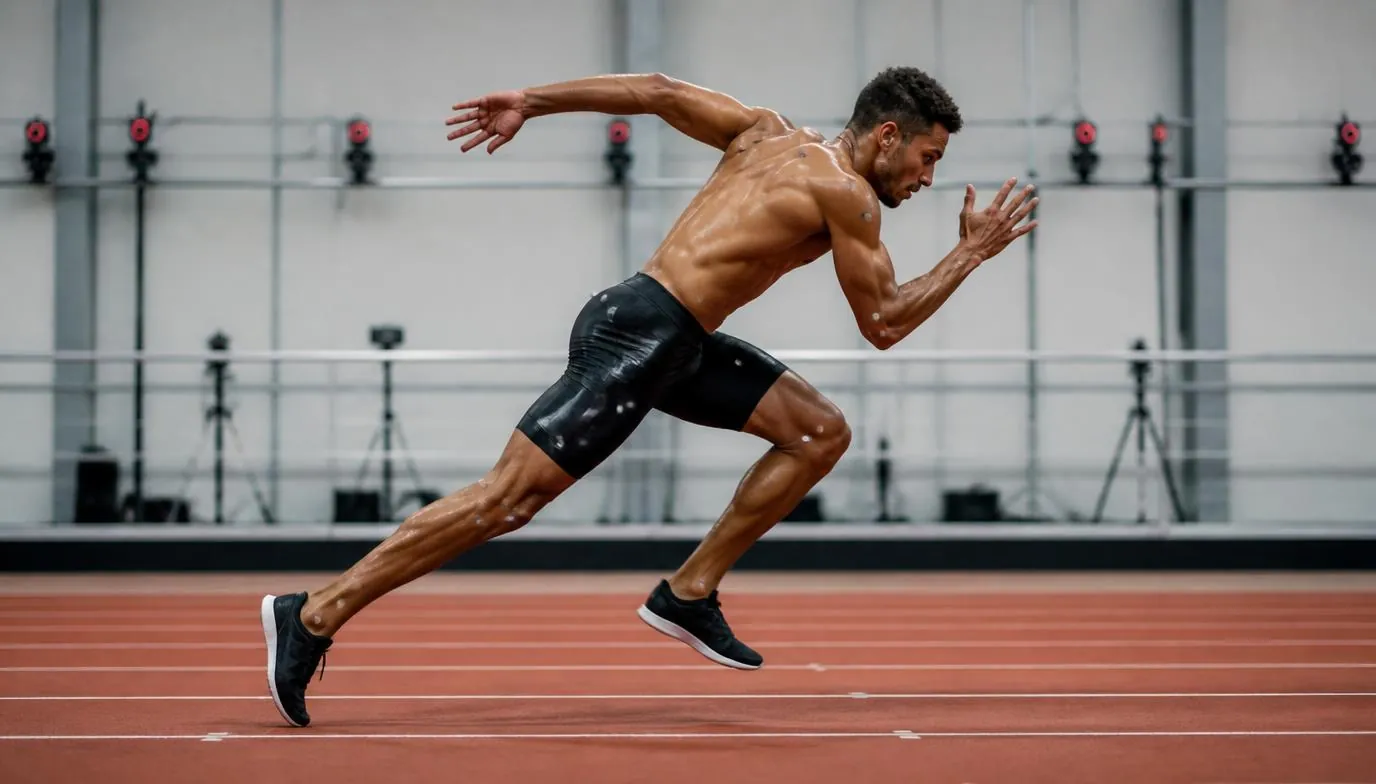
Elite athletics has absorbed data analytics more thoroughly, and more quickly, than almost any other individual sport. Force plates, wearable inertial sensors and high-speed video analysis now generate stride-by-stride data on sprinters, ground-contact time on distance runners, and joint-loading patterns on jumpers and throwers that would have required a dedicated research lab to capture even fifteen years ago. The technology has genuinely changed how training is planned. It has not, coaches and sports scientists increasingly caution, changed what ultimately determines who wins.
What analytics has demonstrably improved
- Injury-risk monitoring, using cumulative training-load data to flag athletes approaching thresholds historically associated with soft-tissue injury.
- Technical refinement, giving sprint and jump coaches objective stride-length and contact-time data rather than relying solely on visual assessment.
- Individualised recovery protocols, informed by sleep, heart-rate variability and training-load tracking rather than generic rest schedules.
- Race-strategy modelling for middle- and long-distance events, using pacing data to identify optimal split patterns for a given athlete's physiology.
Where the limits show up
The clearest limitation is that analytics describes what has happened with great precision but predicts what will happen with far less certainty than the volume of data suggests it should. A sprinter's stride mechanics can be measured to a fraction of a second and still not explain why one athlete produces a personal best under championship pressure while a physiologically comparable rival does not. Sports scientists working closely with national federations describe this as the persistent gap between measurable inputs and competitive outcomes — a gap that has not narrowed proportionally to the volume of data now being collected.
We can tell you almost everything about how an athlete moved in training. We still cannot reliably tell you who wins the final on the day.
The psychological and tactical variables that resist measurement
Championship athletics rewards factors that sensors do not capture well: the ability to respond to a rival's mid-race surge, composure under a stadium's noise and pressure, and tactical decisions made in fractions of a second that depend on race-reading experience rather than any pre-programmed model. Coaches increasingly describe data analytics as excellent preparation and poor prediction — useful for building the most physically capable version of an athlete, largely silent on whether that athlete will execute under the specific pressure of a global final.
The resource and equity question
There is also a structural concern that has received less attention than the technology itself: access to advanced analytics infrastructure is heavily concentrated among wealthier national federations and well-funded individual programmes, while athletes from less-resourced systems compete without comparable monitoring, biomechanical feedback or recovery technology. If data-informed training genuinely produces a competitive edge, that edge is currently distributed in a manner that tracks national sporting budgets rather than raw athletic talent, a disparity that sits uneasily alongside athletics' self-image as a sport decided purely on the track.
None of this argues for abandoning the analytical tools that have become standard across elite programmes; the injury-prevention and training-load benefits are too well established to dispute. It argues for a more measured claim about what the data actually delivers — meaningfully better preparation, not a solved formula for winning — and for closer attention to who currently has access to that preparation and who does not.
Was this helpful?
Dr. Ivan Petrov
Science Editor, Lonic
Ivan holds a doctorate in condensed matter physics and worked on superconducting qubit error correction before moving into science journalism.
- Quantum computing
- Physics
- Research policy
Read our editorial standards or send a correction.
Related articles

Nirmal Purja Missing on Broad Peak: What Is Known About the Search
One of the most recognisable figures in high-altitude mountaineering is unaccounted for after an avalanche. A factual account of the incident and the conditions facing rescuers.

The Broad Peak Avalanche: Why the Karakoram Is Slipping Earlier Each Season
Warmer summers are altering snowpack behaviour on the world's highest mountains. The consequences show up first as timing, and timing is what avalanche safety depends on.
Avalanche Safety: The Decisions That Matter More Than the Equipment
Transceivers and airbags save lives. But post-incident analysis keeps finding that the fatal error happened hours earlier, in a decision nobody registered as a decision.

World Cup 2026: Argentina and Brazil Advance as the Expanded Format Takes Shape
Argentina beat Australia 4-1 and Brazil overcame Mexico 2-1. Beyond the scorelines, the 48-team tournament is already revealing what the new structure rewards.