Heat and Player Welfare: The Physiological Cost of Summer Football Tournaments
As the 2026 World Cup is played across venues with punishing midsummer heat, medical staff and players' unions are pushing harder than ever for scheduling changes that organisers have resisted for years.
 Dr. Ivan Petrov 7 min read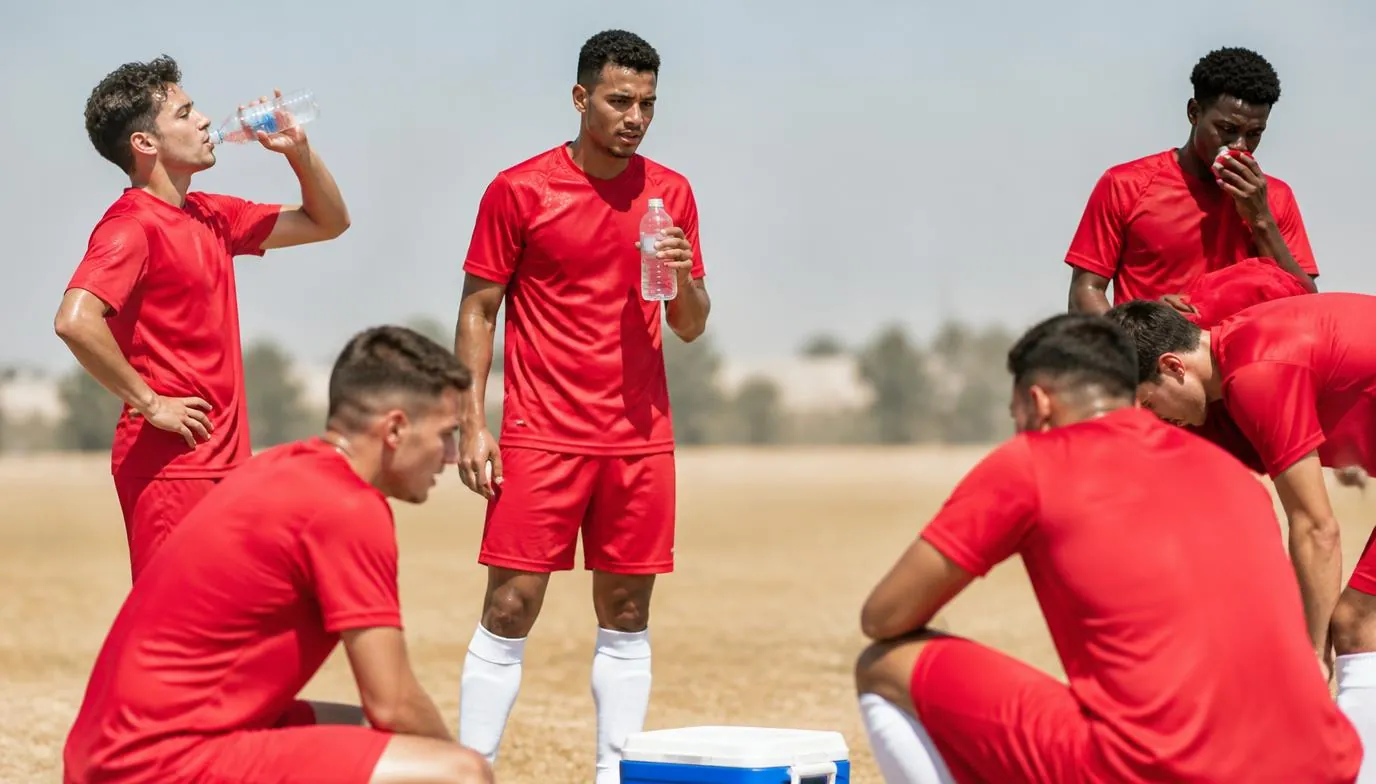
Heat has become one of the defining medical stories of the 2026 World Cup, not because any single episode has been catastrophic, but because the cumulative physiological load on players across a monthlong tournament in high-summer venues is now being tracked, published and argued over in a way it was not a decade ago. Wet-bulb globe temperature readings, once a niche metric used mainly in military and endurance-sport contexts, are now cited in post-match press conferences.
What heat actually does to performance
The core physiological problem is straightforward: intense exercise generates metabolic heat that the body sheds primarily through sweat evaporation, and that mechanism becomes progressively less effective as ambient humidity rises, regardless of temperature alone. High wet-bulb conditions — hot and humid together — can leave the body unable to cool itself even when sweating heavily, driving core temperature upward through a match in a way that degrades decision-making, sprint capacity and, in extreme cases, poses genuine heat-illness risk.
- Cooling breaks are now written into match protocols when pitch-side heat indices cross agreed thresholds, typically inserted near the half-hour mark of each half.
- Kick-off times for the most heat-exposed venues have been shifted later into the evening compared with earlier tournament cycles, though not as consistently as medical advisors have requested.
- Hydration strategies have moved from generic advice to individualised sweat-rate testing for squads with the medical resources to run it.
- Substitution allowances have been expanded in some competitions specifically to manage heat load, separate from injury substitutions.
We can mitigate heat stress at the margins with breaks and hydration protocols. We cannot engineer it away while continuing to schedule matches at the hours broadcasters prefer.
The scheduling conflict that will not resolve itself
The tension at the centre of this debate is commercial rather than medical. Afternoon kick-off slots align with prime-time television audiences in Europe and Asia, generating the broadcast revenue that funds the tournament, while the coolest and safest playing windows fall overnight local time in many host cities. Players' representative bodies have been consistent in arguing that welfare should take precedence over scheduling convenience, but organisers have historically balanced that demand against the financial reality that broadcast rights fund almost everything else in the game.
A gradually shifting consensus
What has changed since previous tournament cycles is the willingness of governing bodies to publish heat-related protocols and defend them publicly, rather than treating the subject as a minor operational detail. That shift owes something to broader public awareness of extreme heat as a recurring feature of a warmer climate, and something to sustained lobbying by player unions who point out that professional footballers are, in effect, being asked to perform at the physiological edge of human tolerance for the convenience of a television schedule.
None of this suggests heat concerns are about to reshape World Cup scheduling wholesale. But the direction of travel — more monitoring, more mandated breaks, more public acknowledgement that conditions are a genuine constraint on performance and safety — looks unlikely to reverse, even if the pace of change continues to frustrate the medical staff pushing for it.
Was this helpful?
Dr. Ivan Petrov
Science Editor, Lonic
Ivan holds a doctorate in condensed matter physics and worked on superconducting qubit error correction before moving into science journalism.
- Quantum computing
- Physics
- Research policy
Read our editorial standards or send a correction.
Related articles

The Round of 32: How FIFA's Expanded Knockout Format Is Rewriting Squad Management
With the 2026 World Cup's first knockout round under way, coaches are managing rotation, fitness and suspension risk across a longer tournament than any before it. The maths of survival has changed.
Nirmal Purja Missing on Broad Peak: What Is Known About the Search
One of the most recognisable figures in high-altitude mountaineering is unaccounted for after an avalanche. A factual account of the incident and the conditions facing rescuers.

The Broad Peak Avalanche: Why the Karakoram Is Slipping Earlier Each Season
Warmer summers are altering snowpack behaviour on the world's highest mountains. The consequences show up first as timing, and timing is what avalanche safety depends on.
Avalanche Safety: The Decisions That Matter More Than the Equipment
Transceivers and airbags save lives. But post-incident analysis keeps finding that the fatal error happened hours earlier, in a decision nobody registered as a decision.