Amazon Deforestation Falls to Its Lowest Level in a Decade, Brazilian Data Shows
Brazil's Amazon deforestation figures for January to June hit their lowest point in ten years, though experts warn that degradation from fires and drought is outpacing the improvement.
 Elias Braun 8 min read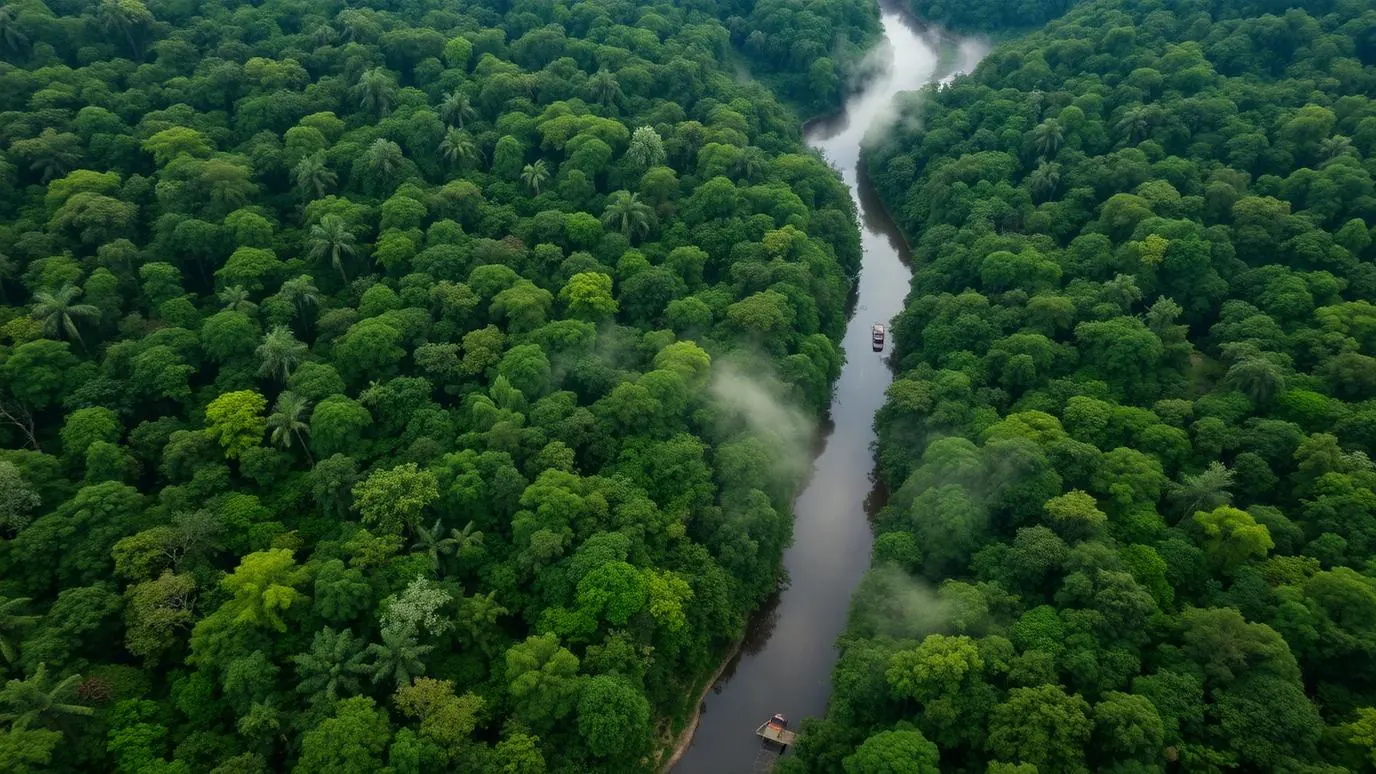
Deforestation in Brazil's Amazon fell to its lowest January-to-June level in ten years, according to Al Jazeera's review of government satellite data, offering the clearest sign yet that recent enforcement efforts are having a measurable effect on forest clearance. Brazil's national space research institute, INPE, had recorded roughly 2,090 square kilometres of deforestation over the same six-month period a year earlier, according to Mongabay, making this year's figures a substantial improvement.
The numbers behind the headline
INPE's DETER alert system, which tracks deforestation warnings across the twelve months to June, recorded a total of 3,182 square kilometres, the lowest annual figure since 2014. The monthly detail is just as striking: alerts in May 2026 fell to 370 square kilometres, down from 960 square kilometres in May 2025, a drop of well over half in a single month's comparison. Taken together, Brazil is on track for its lowest annual deforestation rate since 2012, according to the Associated Press.
- January-to-June deforestation this year came in at the lowest level recorded in a decade of comparable data.
- The same period a year earlier saw roughly 2,090 square kilometres cleared, according to INPE figures cited by Mongabay.
- The trailing 12-month DETER alert total of 3,182 square kilometres is the lowest since 2014.
- May 2026 alerts of 370 square kilometres compare with 960 square kilometres in May 2025.
The politics of the announcement
The figures were announced at a ceremony on 11 June attended by President Lula, who has made reversing Amazon deforestation a central plank of his environmental agenda since returning to office. The data gives his government tangible evidence to point to, both domestically and ahead of international climate negotiations, after years in which Brazil's deforestation record drew sustained criticism from environmental groups and trading partners alike.
A ten-year low is real progress, and it should be treated as real progress. It should not be treated as a solved problem, because the forest is still losing ground through routes these figures don't fully capture.
The degradation warning
Environmental researchers caution that outright clearance is only one measure of forest loss. Degradation from fires, selective logging and drought stress is, by several experts' assessment, now outpacing the decline in clear-cut deforestation. A degraded forest may remain standing in satellite imagery used to calculate clearance figures while losing much of its biomass, biodiversity and capacity to store carbon, meaning the headline improvement may understate the pressure the Amazon is still under.
- Fires linked to drought conditions have damaged forest areas that were not formally cleared.
- Selective logging can degrade forest structure without triggering the same satellite alerts as clear-cutting.
- Drought years, increasingly frequent across the Amazon basin, weaken tree cover and raise fire risk even where clearance itself has slowed.
- Researchers argue degradation should be tracked and reported with the same rigour as deforestation figures.
What to watch
- Whether the full-year 2026 figures confirm Brazil's lowest deforestation rate since 2012.
- Whether INPE expands its public reporting to give degradation the same prominence as clearance data.
- Whether enforcement funding is sustained through the dry season, historically the highest-risk period.
- How Brazil's improved figures factor into upcoming international climate finance and trade discussions.
The trend line is genuinely encouraging, and Brazilian officials are right to describe it as the strongest deforestation data the country has produced in years. But the scientists studying the data most closely are converging on a consistent message: a slower rate of clearance does not necessarily mean a healthier forest, and the fires and drought driving degradation are, for now, moving in the opposite direction.
Was this helpful?
Elias Braun
Energy and Climate Editor, Lonic
Elias covers energy systems and industrial decarbonisation, with a background in grid planning for a European transmission operator.
- Energy systems
- Climate technology
- Infrastructure
Read our editorial standards or send a correction.
Related articles
European Wildfires 2026: 325,000 Displaced and a Fire Season That Started Early
France and Spain are carrying the worst of a summer that arrived weeks ahead of schedule. The damage is severe, but the more important story is how the season is changing shape.

Wildfire Evacuation Guide: What to Prepare Before the Warning Arrives
Most evacuation failures are not dramatic. They are ten minutes lost looking for documents. A practical, evidence-based checklist for households in fire-exposed regions.
Hungary Shuts Its Only Nuclear Plant as the Danube Hits Record Lows
Hungary is closing the Paks nuclear plant for the first time in 44 years after record-low Danube levels left its cooling system unable to draw water from the river.

South Korea Records Its Hottest Day Ever as Seoul Issues First Severe Heat Alert
Yangsan hit 42.5C on 2 August, a new national record, as Seoul issued its first-ever top-level heat warning and Daegu passed 40C amid a punishing Asian heatwave.