Hungary Shuts Its Only Nuclear Plant as the Danube Hits Record Lows
Hungary is closing the Paks nuclear plant for the first time in 44 years after record-low Danube levels left its cooling system unable to draw water from the river.
 Elias Braun 8 min read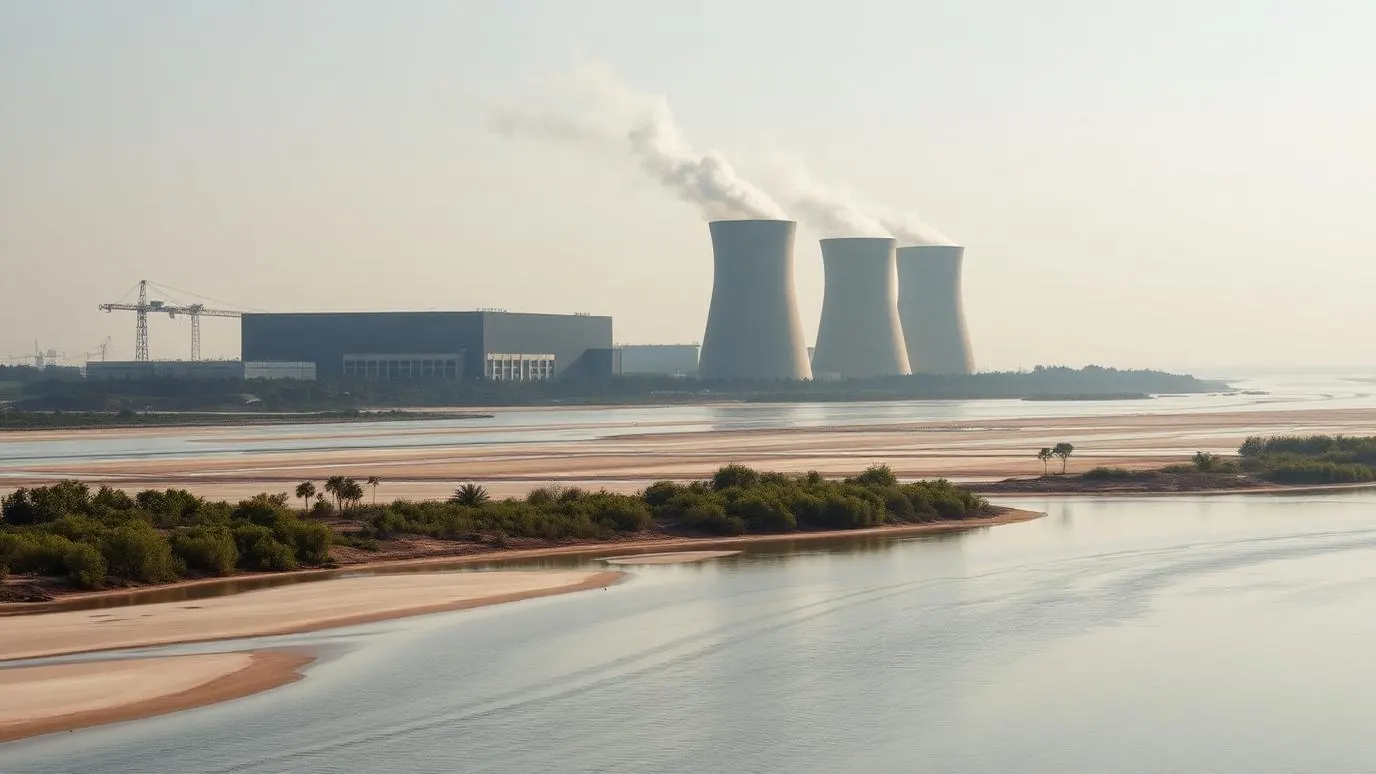
Hungary's Paks nuclear plant, the country's only nuclear facility and the source of roughly 40 to 50% of its electricity, is shutting down for the first time in 44 years. The closure, confirmed by Anadolu, is not the result of a technical fault or a safety incident. It is the result of a river running too low to cool it.
A cooling system built for a different river
Paks draws water from the Danube to cool its reactors, a design common to riverside nuclear plants around the world. That design assumes the river will maintain a minimum depth near the plant's intake structures. According to the BBC, record-low Danube levels now mean the plant's suction nozzles can no longer reach the river at all, a mechanical failure point that has nothing to do with the reactors themselves and everything to do with how far the water has receded.
Prime Minister Péter Magyar said the shutdown would begin on Monday, 3 August 2026, and described the situation facing the country as 'a critical five days', language reported by both the Japan Times and AP. The phrase suggests the government sees the coming days as the point at which the country's electricity supply is most exposed, before alternative sources or reduced demand can compensate for the loss of Paks's output.
- Paks has operated continuously for 44 years without a shutdown of this kind.
- The plant typically supplies roughly 40 to 50% of Hungary's total electricity generation.
- The closure is caused by low river levels affecting the cooling intake, not a fault within the plant.
- The shutdown coincides with a broader European heatwave that is simultaneously raising electricity demand for cooling.
Why a heatwave makes the timing worse
The shutdown lands in the middle of a European heatwave, which raises two problems simultaneously rather than one. Heat drives up electricity demand, largely through air conditioning and refrigeration, at precisely the moment Hungary is losing its single largest source of domestic generation. It also worsens the underlying drought, since higher temperatures increase evaporation and reduce the snowmelt and rainfall that would otherwise replenish the Danube's flow.
A river that cannot cool a power plant and a heatwave that is driving up demand for the electricity that plant supplies are not two separate crises. They are the same crisis, described from two directions.
How Hungary plans to cover the gap
Hungary's government has not published a detailed generation plan for the shutdown period, but the 'critical five days' framing suggests officials expect to rely on a combination of imported electricity, other domestic generation, and, if necessary, demand reduction measures. Hungary's electricity grid is interconnected with neighbouring countries, which provides some flexibility, though a heatwave affecting much of the continent simultaneously limits how much spare capacity is available for Hungary to draw on from elsewhere.
A broader pattern for river-cooled power plants
Paks is not the first river-cooled plant to face this problem, but the scale of its role in Hungary's electricity supply makes this closure unusually consequential. France has previously had to reduce output at several of its Rhône and Loire-cooled reactors during hot, dry summers, and the pattern is becoming familiar enough that energy planners increasingly treat river temperature and flow as a planning constraint rather than a rare exception. What is different about Paks is that Hungary does not have the same depth of alternative nuclear capacity to fall back on.
What to watch
- Whether the Danube's level recovers enough within the 'critical five days' for Paks to resume drawing cooling water.
- How much electricity Hungary needs to import from neighbouring grids during the shutdown, and at what cost.
- Whether the government introduces any demand-reduction measures if the heatwave persists alongside the outage.
- Whether this event accelerates any Hungarian plans to diversify cooling infrastructure or generation sources.
The shutdown of Paks is, in one sense, a narrow engineering story about intake nozzles and river depth. In another sense, it is a preview of a problem that riverside power infrastructure across Europe will keep encountering as droughts and heatwaves become less exceptional. Hungary's coming days will be an early, closely watched test of how a country manages losing its single largest source of electricity with almost no notice.
Was this helpful?
Elias Braun
Energy and Climate Editor, Lonic
Elias covers energy systems and industrial decarbonisation, with a background in grid planning for a European transmission operator.
- Energy systems
- Climate technology
- Infrastructure
Read our editorial standards or send a correction.
Related articles

European Wildfires 2026: 325,000 Displaced and a Fire Season That Started Early
France and Spain are carrying the worst of a summer that arrived weeks ahead of schedule. The damage is severe, but the more important story is how the season is changing shape.

Wildfire Evacuation Guide: What to Prepare Before the Warning Arrives
Most evacuation failures are not dramatic. They are ten minutes lost looking for documents. A practical, evidence-based checklist for households in fire-exposed regions.

South Korea Records Its Hottest Day Ever as Seoul Issues First Severe Heat Alert
Yangsan hit 42.5C on 2 August, a new national record, as Seoul issued its first-ever top-level heat warning and Daegu passed 40C amid a punishing Asian heatwave.

The WMO Says El Nino Will Intensify Through October, Raising Global Heat Risk
The World Meteorological Organization forecasts El Nino intensifying through October 2026, with hotter-than-normal conditions likely across nearly every land area on Earth.